Ontario: Everything You Need to Know
What is Ontario Canada known for?
Ontario Canada is known for its lush forests, beautiful landscapes, and the Great Lakes.
Ontario is located in Eastern Canada and is one of the four most populated provinces in Canada. Ontario has a very diverse climate from desert to heavy forest areas. It ranges from hot summers to mild winters.
Ontario Canada consists of a large number of rural townships, small cities, and big metropolises.
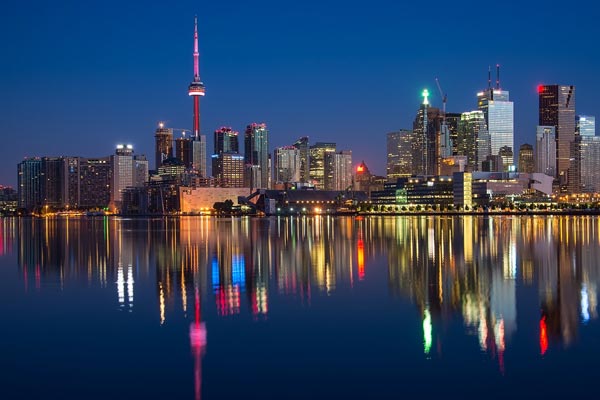
The capital of Ontario is Toronto which is a popular tourist destination in the summer for its many festivals and fine dining options.
Ontario Canada has one of the longest shorelines in the world with over 243,000 sq km of water to explore.
The Great Lakes form almost a perfect rectangle around the state of Ontario.
The Great Lakes is the largest freshwater system in the world with an estimated 5,500 cubic kilometers of water.
The Eastern Canadian province consists of three different geographical regions which are famous for their diverse landscapes and unique features.
There are 11 national parks that you can visit spread throughout Canada which is operated by Parks Canada. Ontario is home to two of these national parks: Algonquin Provincial Park and Point Pelee National Park
Ontario Canada has family-friendly attractions such as Niagara Falls which attracts almost 12 million visitors per year.
The following are some popular tourist destinations in Ontario:
Niagara-on-the-Lake, Muskoka, Ottawa, Toronto, Stratford, Bay of Fundy, Algonquin Provincial Park, Thousand Islands, Point Pelee National Park, Georgian Bay.
The province of Ontario is home to a diverse population of different cultures and ethnicities.
This diversity can be seen especially in the famous metropolitan city Toronto where more than half of its citizens were born outside the country.
Ontario Canada is one of the most ethnically diverse areas in the entire world with over 200 different ethnicities. The following are some of the major ethnic groups in Ontario:
British, Irish, French, German, Italian, First Nations, Chinese, Polish, Ukrainian, Dutch, Greek, Jewish, Indian.
Are Ontario and Toronto the same?
No. Toronto is a city in Ontario, Canada. Toronto is located on the northern shore of Lake Ontario. Toronto is the capital of the province of Ontario. They speak English and French in Ontario.
What is the best place to live in Ontario Canada?
Various factors play into choosing the best place to live such as climate, environment, culture, lifestyle, and especially where jobs are. While living in Toronto can be expensive due to its status of being ‘the big city there are still millions who choose to call Toronto home.
Toronto is making big moves to attract more business and industry including building up its waterfront areas by investing in construction projects including sewers, roads, and parks.
Toronto has one of the world’s largest music industries and with an abundance of surrounding lakes and rivers, Toronto also has a booming tourism industry.
Toronto is home to over 100 ethnic groups with 55% million Torontonians claiming their ethnicity as ‘Canadian’.
Toronto is also the home to many famous landmarks such as the CN Tower and Rogers Centre (formerly called SkyDome), The Hockey Hall of Fame, and the Toronto Zoo.
It has a bustling theatre district and is considered one of North America’s fashion capitals.
Another large city in Ontario is Ottawa a major Canadian federal government center and the nation’s fourth-largest city.
If you are looking for a large urban setting with plenty of green spaces and parks then Ottawa may be the perfect place to live in Ontario. It is also more affordable than Toronto.
Ottawa is known as the nation’s capital city and is a big federal government center.
It is home to many historical landmarks such as Parliament Hill, the Rideau Canal, and the National Gallery of Canada.
Another area attraction that brings in a large number of tourists is the Ottawa River which includes many islands where you can camp, hike, canoe, or even get married.
Culture plays a large role in choosing the best place to live in Ontario Canada.
If outdoor lifestyle is important then living near one of Ontario’s many lakes may be ideal for you. While some people prefer to reside on land others are more at home on the water.
If you are looking for a more affordable place to live in Ontario Canada then look no further than South-Western Ontario, which includes cities such as London, Kitchener, and Waterloo.
If you are considering moving to the area it would be wise to research housing prices and employment trends to increase your chances of finding a job.
Winters in Ontario can be extremely cold and harsh with temperatures reaching -40 degrees Celsius or lower.
It may not seem like there is much to celebrate when living somewhere where winter temperature reaches below -40 degrees Celsius but there is still much to enjoy such as ice skating, skiing, and snowboarding.
South-Western Ontario is home to many universities including the University of Waterloo which has been ranked as one of Canada’s top 20 engineering schools.
South-Western Ontario is also home to the cities of Kitchener, Waterloo, and Cambridge which are collectively known as “the tri-cities.” Kitchener, Waterloo, and Cambridge form together with Ottawa-Hull to create what they call the National Capital Region.
If you are looking for where to live in Ontario Canada then you might want to consider living in the city of Kitchener.
As there are many new developments taking place it is an exciting time to invest in the area.
It’s also worth noting that housing prices are lower than in other major cities such as Toronto or Ottawa which makes buying a home more affordable for young professionals.
With the University of Waterloo being a major focal point it is also a great place to study engineering or business. The local job market should be hot shortly as hundreds of engineers graduate from this university every year.
Kitchener has been named one of Canada’s top five emerging cities. With many new shops and restaurants opening up in the downtown core it is also a great place to enjoy all that urban living has to offer.
Waterloo recently ranked third on Canadian Business’ Best Places to Live list, which measures factors such as economic prospects, income levels, and low taxes. With many shops and retail outlets popping up around the city it is worth considering Waterloo as a possible place where to live in Ontario Canada.
Over 300,000 people currently call the area surrounding Kitchener-Waterloo home (Census Metropolitan Area). With many high-tech jobs being created this region is expected to continue growing for years to come.
As mentioned earlier South-Western Ontario is considered one of the top places to live in Ontario Canada.
If you are currently looking for a place where to reside then look no further than South-Western Ontario as it boasts the lowest unemployment rate of any major Canadian city, relatively low housing prices, and plenty of shops and restaurants.
Why is Ontario so populated?
Because it is an attractive place to live!
Ontario has a pleasant climate, lots of fertile farmland, access to resources and trade routes, many types of jobs, educational opportunities for all ages, modern homes with all the comforts of life, shopping malls, and big-box stores everywhere – just to mention some reasons.
It is a province where people can find a comfortable and fulfilling lifestyle, with many opportunities to work hard and enjoy the fruits of that labor – or not – as they wish.
Owning a house is within reach for most Ontarians who want one, without needing to save up for years to be able to afford it. Costs are moderate, and people can expect a quality of life that is comparable to any other first-world country.
It’s a place where you will always meet new friends who share your interests. You can afford to travel or go backpacking around the world on a shoestring budget, so long as you don’t mind staying in youth hostels along the way.
Ontario is a province where you can live in small or big cities, in rural areas near rivers and lakes, in cozy cottages by the water, or in high-rise condominiums right downtown – all without having to feel isolated from everything else.
While Ontario is not perfect for everyone everywhere, it is a great place to live and enjoy life for the majority of its residents.
If you don’t currently reside in that province, consider moving there! Life is good in Ontario!
What is the coldest month in Ontario?
Answer: ‘The coldest month in Ontario’ is February. The average high temperature for February is -11°C, and the average low temperature is -19°C.
On average, February is the coldest month of all 12 months of the year in Canada!
What food is Ontario known for?
Maple Syrup
Lanark County is known for its maple syrup. Since 1856, the county has been producing maple syrup and is among the top ten maple syrup producers in Canada.
Pasta
Toronto is home to many famous pasta restaurants such as Buca and Terroni. These Italian restaurants are well known for their pasta.
BeaverTails
Ottawa is known for the BeaverTails pastry, also known as Queues de Castor in French. The BeaverTail originates from Ottawa’s Byward Market area where it was first sold to tourists in the 1970s.
Corned Beef and Cabbage
Southern Ontario is known for its Corned Beef and Cabbage. The meal is usually eaten at special events such as family gatherings during the Easter season, Thanksgiving, Christmas dinner, and St. Patrick’s day.
German-Style Sausage
Kitchener-Waterloo is known for the German sausage that they produce there. Their sausage is usually eaten with sauerkraut and mustards.
Shawarma
Ottawa is known for Shawarma. Shawarma is a popular Mediterranean dish where they marinate, roast, and slice the meat on a vertical rotisserie. They then serve it in an Arabic “pita pocket” or on a plate.
Wild Blueberries
Halfway Lake Provincial Park is known for the wild blueberries that they produce there. Halfway Lake near North Bay is in the middle of an area in Ontario in which wild blueberry bushes grow naturally in abundance, and every year in August during the annual harvest, employees from local fruit farms go out and pick the berries.
Cheddar Cheese
Eastern Ontario is known for its Cheddar cheese. Well-known brands such as Canada’s Black Diamond, a popular Canadian cheddar cheese brand, come from the area. The cheeses are sold in various parts of North America and Europe, including Canada and Russia.
What is the main industry in Ontario?
A person from Ontario might answer manufacturing, but this is not actually correct. Manufacturing had been the biggest industry in Ontario for many decades, almost a century, but it isn’t anymore.
In terms of employment numbers and value-added to GDP, it wasn’t even in the top five in Canada in 2016.
The main industry in Ontario is finance and real estate, which had already surpassed manufacturing in 2006.
In 2016, it made up 13% of the province’s GDP while manufacturing was 11%. By value-added to GDP, it had increased from 9% in 2006 to 12% in 2016.
The finance and real estate industry is a very globalized one with major firms throughout the world and may be considered a risky business to work for.
What does Ontario mean?
The name Ontario was chosen by Queen Victoria of England when she established the province in 1867. The word Ontario is derived from the Iroquois word “Onitariio” meaning “beautiful lake”. It is also said to mean “the place where the tree trunks are pulled across the water to make canoes”.
What is the climate like in Ontario?
Ontario has a humid continental climate, characterized by large seasonal temperature differences, with warm to hot summers and cold winters. Precipitation is moderate year-round.
The Great Lakes that border Ontario on the south influence the climatic region of the province. During the fall and winter months, the heat stored from the lakes is released, moderating the climate near the shores of the lakes.
The large size of the Great Lakes and their effect on regional temperatures is evident in lake-effect snowfall; for both Lake Superior and Lake Huron (which border Ontario), a band of lake-effect snow each winter links Buffalo, New York with Sarnia, Ontario, and beyond, as far west as the upper peninsula of Michigan.
Ontario has three main climatic regions; they include the following:
The Boreal Shield – where summers are cool and winters are very cold, consisting of large lakes, many rivers, and rocky mountainous terrain. Precipitation is moderate year-round with a snow cover that lasts for a few months.
The Great Lakes – consists of a large number of rivers and basins with average annual precipitation. The summers are warm, the winters are cold with abundant snowfall.
Southwestern Ontario – is protected by the great lakes from cold winter winds, has moderate year-round temperatures, but has colder winters than areas further west or along the coast of Lake Ontario.
What is the population of Ontario 2021?
The population of Ontario in 2021 is estimated at 14.8 million people.
Where does Ontario get its water?
The majority of water comes from Lake Huron and Lake Superior.